
The USS Constitution is the longest serving vessel in US naval history, and the Navy’s spiritual flagship. This frigate is a piece of American history, serving as a symbol of maritime history, culture, and pride. She has survived so long thanks to her innovation, her success, and the loving care of a thankful nation.

Following the American Revolution, trade resumed without the Royal Navy’s assistance and protection. When American merchant marines were being raided by Barbary pirates with impunity, the American government realizes that the new nation needed to build its own navy for national defense (Beach, 26-27). In March of 1794, Congress passed a bill allocating funds for the construction of six new frigates (National Archives, 1). Other ships would follow, but this was the beginning.
After some letter correspondence between President George Washington and Secretary of War Timothy Pickering, Names were selected for the frigates: United States, President, Congress, Constellation, Chesapeake, and Constitution.
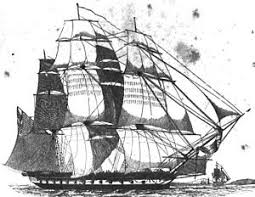
USS United States 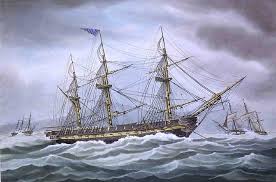
USS President 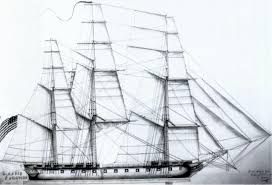
USS Congress 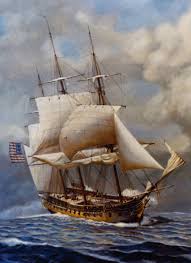
USS Constellation 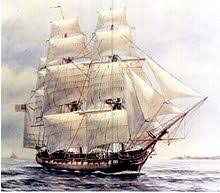
USS Chesapeake 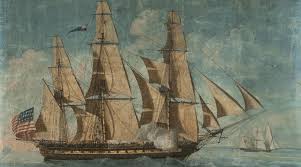
USS Constitution
Just for the Constitution alone, 60 acres of trees were cut down for lumber (Jennings, 10-11). The main materials being Pine, Oak, and southern Live Oak from Georgia (Hollis, 48). The multiple grains of wood would make American frigates more advanced than their European counterparts, capable of taking on cannonballs without them bursting through the hull (USS Constitution Museum “The HMS Guerriere Battle,” 2).
While all of the ships were very innovative in design, the USS Constitution would prove to be the most effective in service. In Tripoli, the Constitution led an expedition that destroyed the USS Philadelphia after it had fallen into the hands of pirates (Allen, 167-172).
The most famous victories for the Constitution were won during the War of 1812. She won all three of her battles against the Royal Navy, defending the home front and showing the world that America could still take on the British Empire. Despite taking on cannon fire from the HMS Guerriere and even colliding with the ship twice, The Constitution still stood while the Guerriere was damaged beyond repair (“HMS Guerriere Battle,” 2). A member of the American crew was said to have shouted out “Huzzah! Her sides are made of iron!” This exclamation led to the USS Constitution being given the nickname “Old Ironsides.” (Toll, 350).
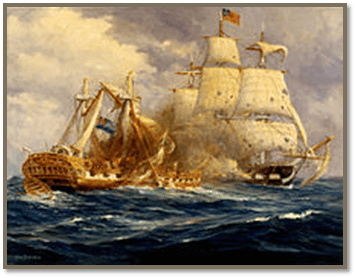
In a later battle against the HMS Java, the Constitution still won even after taking a shot to the helm and requiring manual control of the tiller to steer (Toll, 376).

The most famous victory in the War of 1812 would be under Captain Charles Stewart’s commands. Captain Stewart was born in Philadelphia on July 28 1778. He began his career as a merchant marine but when he turned 19 he joined the US Navy and was able to become a lieutenant. Later in his career he was able to become Captain and he took command of the Constitution. As Captain he was able to fool British ships by pretending to be a British and then capture them. A great moment for Constitution was The battle between the HMS Cyane and the HMS Levant. The battle was a great victory for the Constitution and Captain Stewart. But, not taking anything away from Stewart’s accomplishment, the fight was truly one-sided. He maneuvered a superbly built ship, possessing awesome long-range firepower and a crew that was second to none (Berube and Rodgaard, 91). The battle started off with both ships firing at the Constitution at once, but the Constitution was able to maneuver through the cannon smoke and engage the ships individually, all the while not taking substantial damage to the hull (USS Constitution Museum “The HMS Cyane & HMS Levant Battle,” 2-5). This complete victory would be the last time the USS Constitution would see combat in her long, record-breaking career (“HMS Cyane & HMS Levant,” 5).

Though not in combat, the USS Constitution has continued to serve the United States proudly and faithfully. Between occasionally being dry docked for repair or to be exhibited, the Constitution has served as a training vessel for naval cadets, toured the world for posterity, played rolls in state holidays, represented America abroad, and even hosted foreign esteemed guests like Pope Pius IX, King Ferdinand II of Naples, and even Queen Elizabeth II of Britain (USS Constitution Museum “USS Constitution Timeline”)
 HIST 491-B02 Micah Figgers L28131914
Bibliography:
Allen, Gardner Weld. Our Navy and the Barbary Corsairs. Boston, New York, and Chicago: Houghton Mifflin, 1905.
Beach, Edward L. The United States Navy: 200 Years. New York: H. Holt, 1986.
Founders Online. “To George Washington from Timothy Pickering, 14 March 1795.” https://founders.archives.gov/documents/Washington/05-17-02-0439.
Hollis, Ira N. The Frigate Constitution: The Central Figure of the Navy Under Sail. Boston, New York: Houghton Mifflin, 1900.
Jennings, John. Tattered Ensign: The Story of America’s Most Famous Fighting Frigate, U.S.S. Constitution. Thomas Y. Crowell, 1966.
National Archives. “Launching the New U.S. Navy.” https://www.archives.gov/education/lessons/new-us-navy/act-draft.html.
Toll, Ian W. Six Frigates: The Epic History of the Founding of the US Navy. New York: W. W. Norton, 2006.
USS Constitution Museum. “The HMS Guerriere Battle.” https://ussconstitutionmuseum.org/major-events/the-hms-guerriere-battle/.
USS Constitution Museum. “USS Constitution Timeline.” https://ussconstitutionmuseum.org/discover-learn/history/timeline/
LikeLike